Showing posts with label PBS. Show all posts

Wednesday, August 11, 2010

College Inc. (2010)


LINK

Review:

Even in lean times, the $400 billion business of higher education is booming. Nowhere is this more true than in one of the fastest-growing -- and most controversial -- sectors of the industry: for-profit colleges and universities that cater to non-traditional students, often confer degrees over the Internet, and, along the way, successfully capture billions of federal financial aid dollars.

In College, Inc., correspondent Martin Smith investigates the promise and explosive growth of the for-profit higher education industry. Through interviews with school executives, government officials, admissions counselors, former students and industry observers, this film explores the tension between the industry --which says it's helping an underserved student population obtain a quality education and marketable job skills -- and critics who charge the for-profits with churning out worthless degrees that leave students with a mountain of debt.

At the center of it all stands a vulnerable population of potential students, often working adults eager for a university degree to move up the career ladder. FRONTLINE talks to a former staffer at a California-based for-profit university who says she was under pressure to sign up growing numbers of new students. "I didn't realize just how many students we were expected to recruit," says the former enrollment counselor. "They used to tell us, you know, 'Dig deep. Get to their pain. Get to what's bothering them. So, that way, you can convince them that a college degree is going to solve all their problems.'"

Tuesday, June 29, 2010

Unforgettable: The Korean War (2010)


Review:
Korean War veterans recount their memories of America in the late 1940s and early 1950s, when young men from all over the country were being shipped off to defend South Korea against the advancing Red Army in the north. Unforgettable: The Korean War recalls the "un-won" war that never ended. The Korean War killed tens of thousands of U.S. soldiers and affected many more lives at home.

Friday, April 16, 2010

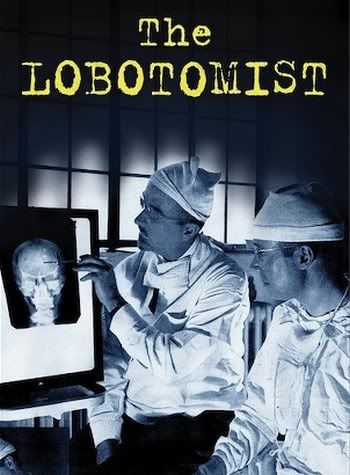
Lobotomist (2008)


Director:
Barak Goodman and John Maggio

Review:
Seeking a faster and less invasive way to perform the procedure, Freeman invented the "ice pick" or transorbital lobotomy, which, at first, literally used an ice pick hammered through the back of the eye socket into the brain. Freeman was able to perform these very quickly, outside of an operating room, and without a surgeon. For his first transorbital lobotomies, Freeman used an actual icepick from his kitchen. Later, he utilized an instrument created specifically for the operation called a leucotome. In 1948 Freeman developed a new technique which involved wrenching the leucotome in an upstroke after the initial insertion. This procedure placed great strain on the instrument and in one case resulted in the leucotome breaking off in the patient's skull. As a result, Freeman designed a new, stronger instrument, the orbitoclast. Freeman embarked on a national campaign in his van which he called his "lobotomobile" to demonstrate the procedure to doctors working at state-run institutions; Freeman would show off by icepicking both of a patient's eyesockets at one time - one with each hand. According to some, institutional care was hampered by lack of effective treatments and extreme overcrowding, and Freeman saw the transorbital lobotomy as an expedient tool to get large populations out of treatment and back into private life. The “ice pick lobotomy” was, according to Ole Enersen, performed by Freeman “with a recklessness bordering on lunacy, touring the country like a travelling evangelist. In most cases,” Enersen continued, “this procedure was nothing more than a gross and unwarranted mutilation carried out by a self righteous zealot.”

Thursday, April 15, 2010

When Kids Get Life (2007)


Review:
The United States is one of the only countries in the world that allows children under 18 to be sentenced to life without parole. Human Rights Watch and Amnesty International report that more than 2,000 inmates are currently serving life without parole in the United States for crimes committed when they were juveniles; in the rest of the world, there are only 12 juveniles serving the same sentence, according to figures reported to the United Nations' Convention on the Rights of the Child.  In When Kids Get Life, FRONTLINE producer Ofra Bikel (The O.J. Verdict, Innocence Lost) travels to Colorado to profile five individuals sentenced to life without parole as juveniles.  Colorado was an early pioneer in juvenile justice, focusing on rehabilitation rather than punishment. But in the late 1980s and 1990s, when a sharp increase in violent crimes by young offenders attracted enormous press coverage, legislators nationwide clamped down. In Colorado, the General Assembly eliminated the possibility of parole for life sentences and expanded the power of district attorneys to treat juveniles as adults.

Monday, April 12, 2010

The Madoff Affair (2009)


Review:
In the mid-1960s, Bernard Madoff tapped money from Jewish businessmen at exclusive country clubs with the promise of steady guaranteed returns on their investments. He then set his sights on Europe and Latin America, brokering deals with powerful hedge fund managers and feeder funds from Buenos Aires to Geneva. Billions of dollars were channeled to Madoff’s investment firm, and his feeders became fabulously wealthy. The competition wondered how the man could produce such steady returns in good times and bad. There were allegations that Madoff was “front-running” or operating a Ponzi scheme, which the SEC investigated several times over the last two decades. Madoff remained untouched until December 11, 2008, when he admitted it was all “one big lie.” FRONTLINE producers Martin Smith and Marcela Gaviria unravel the story behind the world’s first truly global Ponzi scheme - a deception that lasted longer, reached wider and cut deeper than any other business scandal in history.

Download:
http://rapidshare.com/files/312494333/The_Madoff_Affair.part1.rar
http://rapidshare.com/files/312516146/The_Madoff_Affair.part2.rar
http://rapidshare.com/files/312536178/The_Madoff_Affair.part3.rar
http://rapidshare.com/files/312588710/The_Madoff_Affair.part4.rar
http://rapidshare.com/files/312609249/The_Madoff_Affair.part5.rar
http://rapidshare.com/files/312636201/The_Madoff_Affair.part6.rar
http://rapidshare.com/files/312662097/The_Madoff_Affair.part7.rar
http://rapidshare.com/files/312670911/The_Madoff_Affair.part8.rar

No password

Saturday, March 27, 2010

China Blue (2005)


Director:
Micha X. Peled


Synopsis
They live crowded together in factory dormitories where water has to be carried upstairs in buckets. Their meals and rent are deducted from their wages, which amount to less than a dollar a day. Most of the jeans they make in the factory are purchased by retailers in the U.S. and other countries. China Blue takes viewers inside a blue jeans factory in southern China, where teenage workers struggle to survive harsh working conditions. Providing perspectives from both the top and bottom levels of the factory’s hierarchy, the film looks at complex issues of globalization from the human level.
The film which was made without permission from the Chinese authorities, offers an alarming report on the economic pressures applied by Western companies and the resulting human consequences, as the real profits are made - and kept - in first-world countries. The unexpected ending makes the connection between the exploited workers and U.S. consumers even clearer.

Related Posts with Thumbnails